


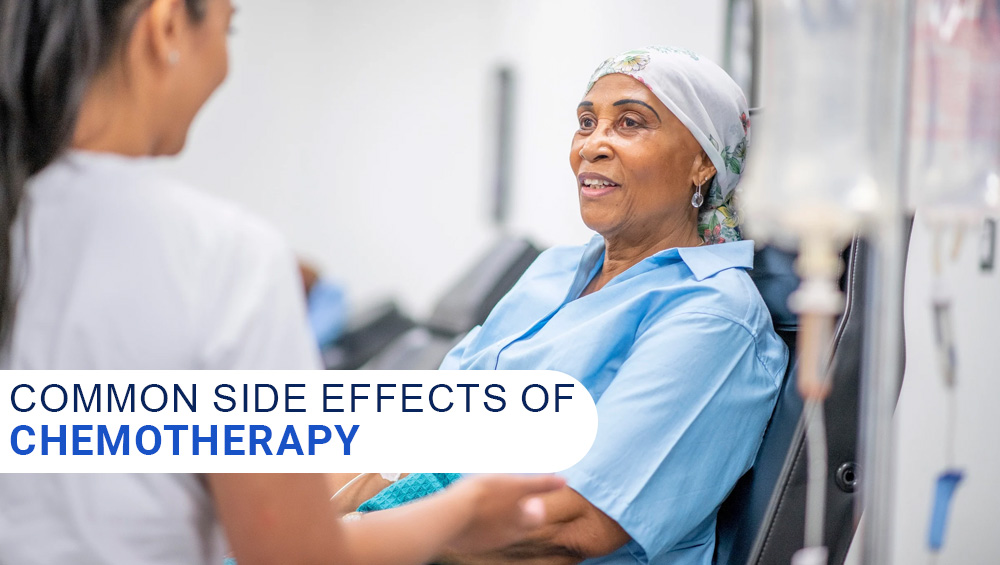

The most commonly used treatments for cancer are chemotherapy, which utilizes powerful chemicals to kill and destroy cancerous cells. It is extremely effective in stopping or reducing cancer; however, it could affect healthy cells too and can cause negative side effects. These side effects can be challenging to manage; however, knowing about what to expect and how to manage these issues can help.
The top common side effects of chemotherapy
1. Fatigue and Weakness
2. Hair Loss
3. Nausea and Vomiting
4. Changes in Appetite and Taste
5. Mouth Sores and Oral Problems
6. Low Blood Counts
7. Digestive Issues
8. Skin and Nail Changes
9. Emotional Changes
10. Neuropathy (Nerve Damage)
Here are the most common side effects patients experience during chemotherapy:
1. Fatigue and Weakness
Fatigue is among the most frequently described negative side effects. It is possible to feel tired even when you've had a good night's sleep. It is due to chemotherapy. It could cause damage to healthy cells and also reduce the number of red blood cells. This could lead to anemia. Simple tasks like walking or climbing a staircase can be exhausting.
Tips: Stop whenever your body needs to grow. Eat nutritious food, and engage in an easy workout like the stairs for a few steps to increase how much energy you utilize.
2. Hair Loss
Many chemotherapy drugs can harm the hair follicles that causing hair loss or thinning. It just does not happen on your scalp but everywhere you have hair, eyelashes, eyebrows, and other body hairs. The loss of hair usually starts in just a few weeks of starting treatment.
Tips: once treatment is stopped, the hair starts growing back. Use a soft brush for hair loss and gentle shampoos, as well as wearing a cap, which can help reduce hair loss.
3. Nausea and Vomiting
Along with vomiting, stomach distress, and nausea can be due to chemotherapy, and it is one of the most frequently experienced side effects by patients. Negative chemotherapy side effects are almost always painful. This is something that healthcare providers try to alleviate with the prescription of anti-nausea medications.
Tips: More frequent meals, and steering clear of spicy and oily meals. Water and ginger are very effective in easing nausea and should be consumed.
4. Changes in Appetite and Taste
The senses of smell or taste are common in chemotherapy. Food can be tasted that is metallic, bland, or has a different taste. It can lead to a loss of appetite and weight loss.
Tips: Mix the textures and colors, take smaller portions of meals and consume cold meals if hot meals trigger nausea. Supplements with nutritional value are a good idea to make sure that the body is getting enough calories.
5. Mouth Sores and Oral Problems
Chemotherapy can cause gum sores and dry mouth, and gum swelling. These conditions can be difficult to eat or drinking difficult and painful. Some sufferers develop a different taste perception due to these oral disorders.
Tip: Clean your teeth gently, then rinse with a mild saltwater solution. utilize a soft brush, and avoid extremely spicy, hot, or acidic food items. The doctor might also recommend the use of medicated mouthwashes.
6. Low Blood Counts
Chemotherapy can reduce white blood cells, red blood cells, and platelets. Low white blood cells make you more prone to infections, low red blood cells cause fatigue, and low platelets increase the risk of bleeding or bruising easily.
Tip: Avoid crowded places, practice proper hand hygiene, and monitor for unusual bruising, bleeding, or fever. Your doctor may prescribe medications or transfusions to manage low blood counts.
7. Digestive Issues
The patient may experience constipation, diarrhea, or bloating after chemotherapy because the drugs can affect the digestive system cells, which can cause discomfort
Tips: Rehydrate yourself with plenty of water and eat a balanced diet that includes fiber-rich foods, and follow your doctor's prescriptions for medicines that may ease stomach discomfort.
8. Skin and Nail Changes
Chemotherapy can cause the skin to become dry and flaky skin rashes or even nail changes. Nails can become dry, discolored, or develop lines. The skin's sensitivity to sunlight could increase.
Tips: Regularly moisturize your skin, and use mild soaps. Stay clear of harsh chemicals, and protect your skin from harsh sun.
9. Emotional Changes
Undergoing chemotherapy can be emotionally challenging. Many patients experience anxiety, depression, mood swings, or stress. These emotional changes are natural, considering the physical and mental toll of treatment.
Tip: Talk to friends, family, or support groups. Professional counseling and relaxation techniques like meditation or deep breathing can help.
10. Neuropathy (Nerve Damage)
Certain chemotherapy drugs can cause peripheral neuropathy. It may cause numbness, tingling, or discomfort in the feet and hands. This may affect the balance and activities of daily living.
Tip: Choose comfortable shoes; do not walk barefoot. Let your doctor know when symptoms become more severe. Certain medications can reduce neuropathy.
Conclusion
It is easier to manage the adverse effects of chemotherapy by being aware of the effects. The negative effects of chemotherapy can last for a period of time; however, they will decrease when the treatment is over. It is important to stay in touch with a cancer specialist and follow their recommendations regarding diet, medication and lifestyle changes that may be suggested will be crucial.
People can be affected in many ways. Certain reactions are not severe in nature. Some people suffer from extreme. You can control your emotions and reactions they bring by taking a moment to take note of your own desires, and reaching out to other members of your group to offer assistance. This will help you be focused on healing and recovery during this time.

Recommended for you
Facelift vs Thread Lift – Which Is Better for You?
Common Side Effects of Chemotherapy
Varicoceles: Symptoms, Diagnosis & Treatment
Urologist vs. Andrologist: Differences and When to Consult