

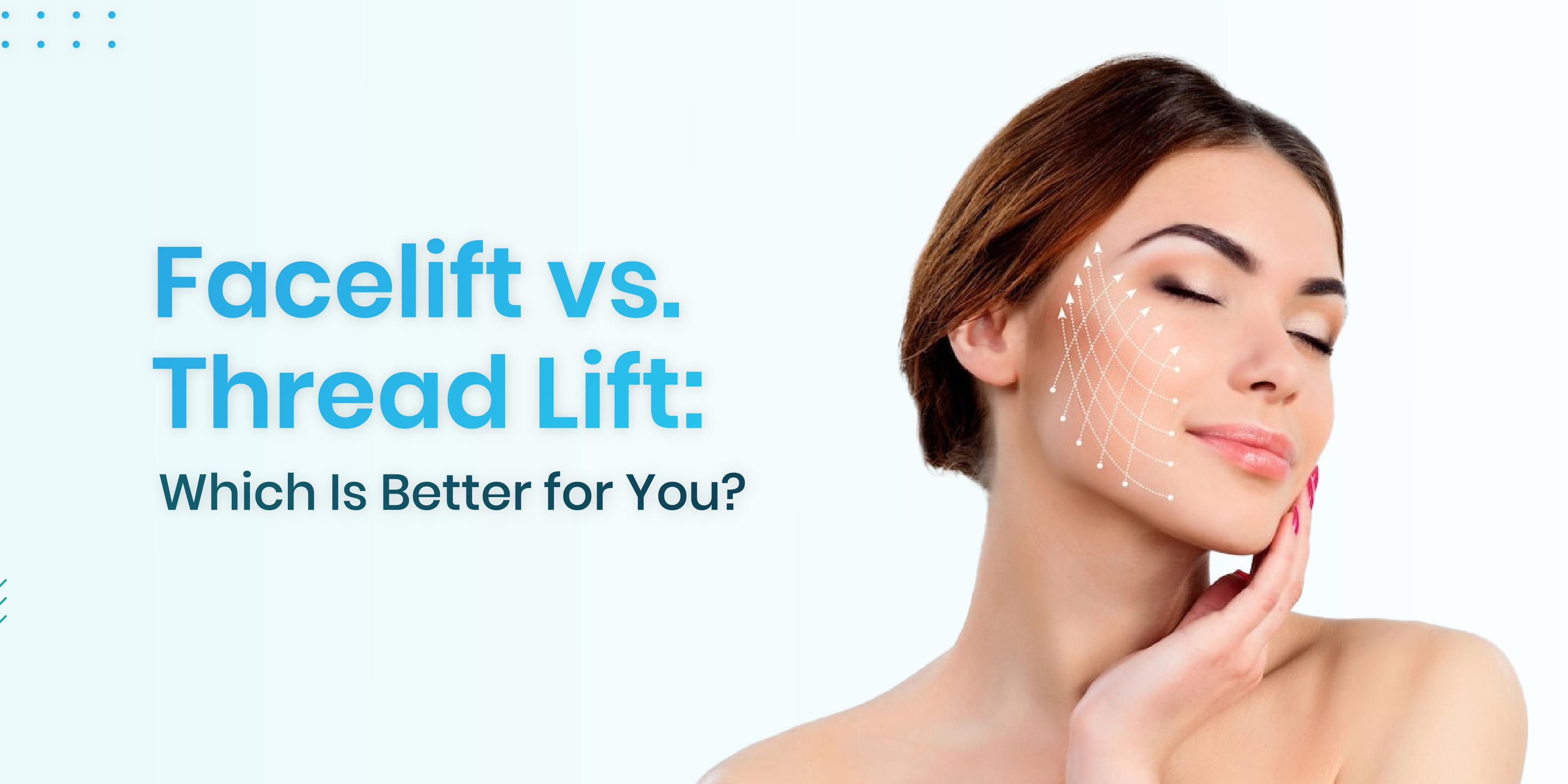


Having come to terms with the fact that aging gracefully is a beautiful “goal” is a step taken on the road to a fulfilled life, yet at times, skin starts to show signs of aging that may need a little intervention to keep the skin from diminishing. When the skin starts to show signs of aging the treatments available, facelifts and thread lifts, offer varying solutions to regaining a youthful appearance.
A facelift, which is a surgical treatment, serves to redefine the face and neck. A thread lift, on the other hand, is a non-surgical, temporary use of sutures which is also termed a thread lift and is marketed as a quicker solution. They both can achieve similar results, but which is more effective?
Understanding Facelift Surgery
A facelift, sometimes referred to as rhytidectomy is a surgical operation that lifts and tightens the skin, tissues of the neck and face. For the operation, small incisions are made just behind the ears and the hairline. The facial surgeon then repositions the underlying muscles, removes excess skin and recontours the face to restore a youthful appearance.
Facelifts are appropriate for patients who are experiencing moderate to severe skin sagging, deeply set wrinkles and loose skin along the neck and jawline. With proper care, facelift results last for decades, but it is the most invasive procedure which means it includes a longer recovery period, anesthesia and the most post-surgery care.
What Is a Thread Lift?
A thread lift is a type of cosmetic treatment that is not as invasive as operations which employ skin lifting and skin tightening using dissolvable thread and materials such as PDO (polydioxanone).
These PDO threads are inserted under the skin using a fine needle and after placement, the threads lift the tissue to form an effect of tightening the skin.
This treatment also helps in collagen production which helps in firming and smoothing the skin with time. The ideal candidate for a thread lift is someone in their 30s to 50s who is experiencing the earlier stage of aging.
The whole process takes under an hour and recovery is fast as most people resume normal activities in a day or two. There is only a minimal amount of discomfort.
Facelift vs. Thread Lift: Key Differences
Which One Should You Pick?
If you want really good, long-lasting results, maybe you should get a facelift. But, if you'd like to have a natural, fresh look with barely any recovery time, then a thread lift is for you. Some people get thread lifts to begin with and then get a facelift when they get older.
Combined Treatments
These days, aesthetic care usually involves a mix of options. You can get a facelift and then have thread lifts or fillers added on to maintain your results for a longer time. You should talk to your cosmetic surgeon about a plan that works for you.
FAQs About Facelift vs. Thread Lift
1. Which lasts longer, facelift or thread lift?
Facelifts can last about 10 years, but thread lifts last 1-2 years at most.
2. Is a thread lift painful?
Not really. You have local anesthesia, so it shouldn’t hurt. You might feel a little sore afterwards, but that’s it.
3. When should I consider a facelift?
Once you reach 45 years of age, if none of your work eliminates facial sagging and it is moderate to severe, a facelift offers a longer rejuvenation.
4. Can thread lifts replace facelifts?
If you have early stages of aging, yes, you can. If you are looking for something more drastic, no.
5. Are results from thread lifts natural-looking?
When done by a good professional, you won’t have a “tight” look.
Conclusion
Getting a facelift or a thread lift can boost your confidence. It just depends what you are looking to achieve. A facelift is meant for someone looking for long-lasting and more dramatic changes to their appearance.
On the other hand, you can also achieve great results with a thread lift if you are looking for something quicker with less recovery time. Neither is “better” it just depends on your skin, age and where your comfort is on the scale.
Seek a trusted plastic surgeon. You want to bring back your glow, not change it. You want to feel more comfortable in your skin, not different.

Recommended for you
Facelift vs Thread Lift – Which Is Better for You?
Common Side Effects of Chemotherapy
Varicoceles: Symptoms, Diagnosis & Treatment
Urologist vs. Andrologist: Differences and When to Consult