



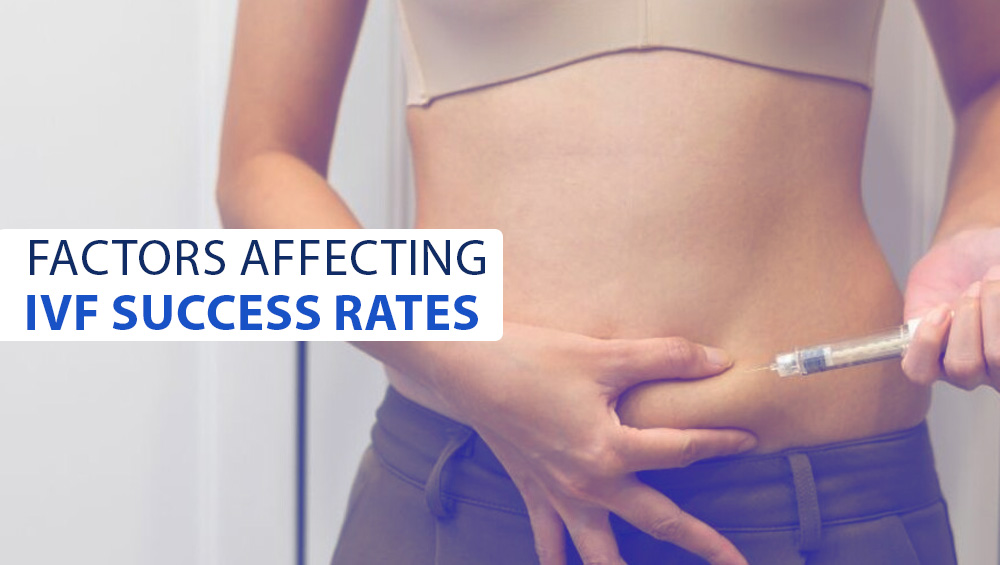
In Vitro Fertilisation (IVF) can be a tremendous opportunity for lots of couples because of the possibility of holding that little bundle of joy they have desired for a long time. But that usually comes with wondering why IVF works for some and not others.
IVF success could hardly be generalized to a single factor. It can be a mix of variables such as the age, health or lifestyle of the individual or the standard of the clinic.
Here in this blog, we aim to explain the most important factors in determining success rates in IVF and how to improve and ease your chances of having a successful IVF experience.
1. Age and Ovarian Reserve
Age is a determining factor in In Vitro Fertilization (IVF) success. Women under the age of 35 have greater success rates as their eggs tend to be healthier and more plentiful.
Tests like AMH (Anti-Müllerian Hormone) levels and antral follicle count provide an estimate of your remaining viable eggs or ovarian reserve.
And of course, age also matters for men. As men grow older, their sperm motility and quality also decline which impacts embryo growth as well.
2. Type and Cause of Infertility
Every case of infertility is unique which is why some are more successful than others.
Having PCOS, endometriosis, blocked fallopian tubes or low sperm counts all affect the outcome of IVF in different ways. Women who have had miscarriages or multiple failed IVF attempts will also need different plans.
The important thing is to find the cause early on and focus on the right medical intervention with or before IVF.
3. Egg, Sperm and Embryo Quality
The best eggs and sperm make a strong foundation for a healthy embryo and a healthy embryo is important for the success of IVF.
If the quality of the eggs and sperm is low, either improper fertilization occurs or the embryo does not develop well enough to implant.
With advanced tools such as ICSI and genetic testing, doctors can select the best embryos for transfer to hopefully improve the chances of success.
4. Uterine Health and Endometrial Receptivity
The most perfect embryo still needs a safe & supportive environment to develop & grow. This is where your uterus comes in!!!
For successful implantation, a healthy endometrial lining is needed. This means your lining should be at least 8-12 mm thick. Fibroids, polyps or infections can cause problems with an embryo attaching.
Hysteroscopy & other imaging tests can be useful & sometimes necessary in evaluating the health of your uterus as a pre-implantation work-up. These problems can sometimes be easily fixed with medications or small procedures & in turn, increase your odds.
5. Lifestyle and General Health
Overall health impacts fertility and success with IVF.
- Consider your weight
- Don’t smoke or drink alcohol
- Make healthy food choices
- Exercise and stress management
- Get quality sleep
6. IVF Protocol and Medical Expertise
Every woman’s body is different, so should her IVF plan. Changes in stimulation protocols, medicine dosages and egg retrieval timing all affect success.
The fertility specialist’s experience and the clinic’s technology are just as important. With advanced laboratories, embryos are cultivated under various optimum conditions.
Be sure to take all advertised claims with a grain of salt. Focus on the clinic’s IVF success rates, quality of the lab and patient reviews.
7. Number of IVF Cycles Attempted
It’s your first IVF cycle. It can suck when it doesn’t work. But there’s always a positive side. Lots of couples get successful after 2 or 3 tries.
With each IVF cycle, the doctors get a little bit more insight into your body. They are able to adjust your treatment plan for the next IVF cycle to make improvements. Better treatment plans should improve the IVF success rates.
So your chances should go way up after a few tries! Just hang in there.
8. Environmental and External Factors
Restricting every external factor is unrealistic, yet you can control your stress levels, hydrate and try to maintain a healthy, balanced and organic diet to improve your chances.
9. Improving Probability of Success with IVF
- Age is a factor you cannot control but most of the other factors that determine the success of IVF can be improved with very simple changes.
- Begin your IVF journey with a healthy body weight.
- Eliminate cigarette and alcohol intake before treatment.
- Effectively manage persistent and chronic medical conditions.
- Adhere to the diet and supplements your physician provides.
Conclusion
There are a lot of unique factors to every single IVF case. These can include personal factors like age or health and other relating to your practitioner’s practice. Understanding all the different factors helps you move forward in your journey with confidence.
Every individual’s case is different. The most important thing is to have your positivity combined with collaboration with your practitioner and the proper self-care.
For an individual assessment of your possible IVF case success factors or to plan your first IVF, arrange a meeting with your assisted reproductive technology practitioner. The proper timing with the most right advice is very important to your goals of becoming a parent.
Recommended for you
Facelift vs Thread Lift – Which Is Better for You?
Common Side Effects of Chemotherapy
Varicoceles: Symptoms, Diagnosis & Treatment
Urologist vs. Andrologist: Differences and When to Consult